The Eight-Second Nothing: Why a Ceiling Fan Just Beat Every Influencer on Your Feed
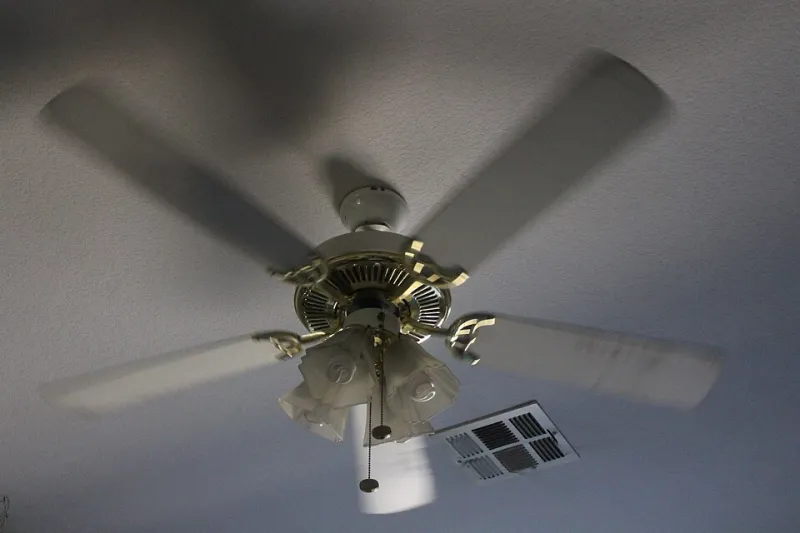
Photo: Noah Wulf, CC BY-SA 4.0, via Wikimedia Commons
There is a video going around of a ceiling fan. It is not a clever fan. It does not wobble ominously, catch fire, or reveal a hidden message when you slow it down. It just turns. The camera stays fixed. The audio is a low, even whir. And somewhere in the United States, a person watched it for eight seconds, felt something loosen behind their eyes, and sent it to three friends.
That is the whole trick of 2026's quietest viral genre. The clip does not ask you to laugh, cry, buy, or duet. It does not demand a stitch, a reaction, or a hot take. It simply exists — a screen door creaking shut, a dorm hallway humming under fluorescent lights, a waiting room air conditioner clicking through its cycle. The internet has spent years getting louder. These videos are winning by refusing to make a sound worth turning up.
The Clip That Does Not Ask for Anything
The format is almost aggressively plain. No jump cuts. No text overlays. No face. No caption begging you to watch until the end. Just a static or near-static shot of an ordinary space, often recorded on a phone that was probably set down on a counter. The sound is whatever the room was already doing: a fridge compressor, a distant lawn mower, the soft clatter of a radiator.
What makes it pop-culture news is not the production value. It is the behavior around it. People are not just watching these clips. They are collecting them, trading them, and building playlists out of them the way earlier generations made mixtapes. A friend sends the ceiling fan. You reply with the motel ice machine. Someone else drops a four-second clip of a parking garage stairwell, and the group chat goes quiet in a good way.
The appeal is partly practical. These videos are easy to scroll past, easy to leave on, and easy to send without explanation. But the deeper draw is stranger: in a feed built on urgency, an eight-second clip of nothing feels like a small act of defiance. It is content that does not want anything from you.
From the Fringe to the Main Feed
Ambient videos are not new. ASMR creators spent the 2010s whispering into microphones and tapping on wooden blocks, and slow-TV experiments have been around since long before that. But those formats came with a label. You had to know you were looking for relaxation content. You had to opt in.
The 2026 version escaped the label. It arrived through the same chute as everything else — a friend's story, a group chat, a random recommendation — and it did not announce itself as wellness. It looked like a mistake. A pocket-dial video. A clip someone forgot to delete. That low-stakes framing is exactly why it travels. Nobody has to admit they need a break. They can just send a ceiling fan and let the message do the work.
Mainstream creators have noticed. The format has been absorbed into travel posts, comedy accounts, and even brand feeds, usually with a wink: a quick cut to a hotel hallway, a lingering shot of a patio fan, a silent beat before the punchline. The quiet clip has become a visual comma. It slows the scroll without stopping it.
Advertisers Are Learning to Whisper
The advertising world is rarely early to a mood, but it is very good at chasing one once it shows up in the numbers. Quiet content offers something advertisers have been losing for years: attention that is not actively annoyed. A viewer who leaves a ceiling-fan clip running is not hate-watching. They are decompressing. That is a valuable place to be.
So the briefs are changing. Fewer flashing cuts. More room tone. More product shots that sit still long enough to feel like scenery. Brands are experimenting with longer, softer spots and with sponsored ambient clips that try to blend into the feed rather than interrupt it. The risk is obvious. The moment a quiet video starts selling something, it stops being quiet. The moment it stops being quiet, the audience can smell it.
That tension is the next chapter of the trend. The format works because it feels unoptimized. Advertisers want to optimize it. Viewers want to keep it a little boring. Somewhere in the middle, a new visual language is being negotiated — one where silence is not dead air but a signal that someone is finally speaking your language.
A Decompression Ritual in Eight-Second Bursts
What people seem to be doing with these clips is not quite watching and not quite listening. It is closer to a reset. You come out of a loud video, a stressful headline, a work message that arrived at the wrong time, and you tap into a dorm hallway that smells like carpet shampoo and old radiators. Nothing happens. Nothing needs to. The clip ends before your brain can build a story around it.
That brevity matters. Thirty seconds of ambient footage can become a commitment. Eight seconds is a breath. It is long enough to register a room and short enough to leave you alone. In a media environment that treats every second as inventory, the eight-second nothing is a tiny loophole.
What the Silence Is Saying
The quiet-clip boom is easy to mock. It is just a fan. It is just a door. But that is also the point. After years of feeds stacked with hot takes, hustle content, and algorithmic urgency, an audience can develop a real appetite for the unremarkable. Not every viral moment needs a lesson. Sometimes the lesson is that you can put down the phone for eight seconds — or, better yet, leave it faceup and let a ceiling fan do the talking.
The most-shared videos of 2026 are not empty. They are full of room tone, ordinary light, and the low hum of a country trying to catch its breath. That may not sound like much. But it is enough to make you stop scrolling, just for a moment, and notice the fan.