The Commute Is Fake. The Boundary Isn't.
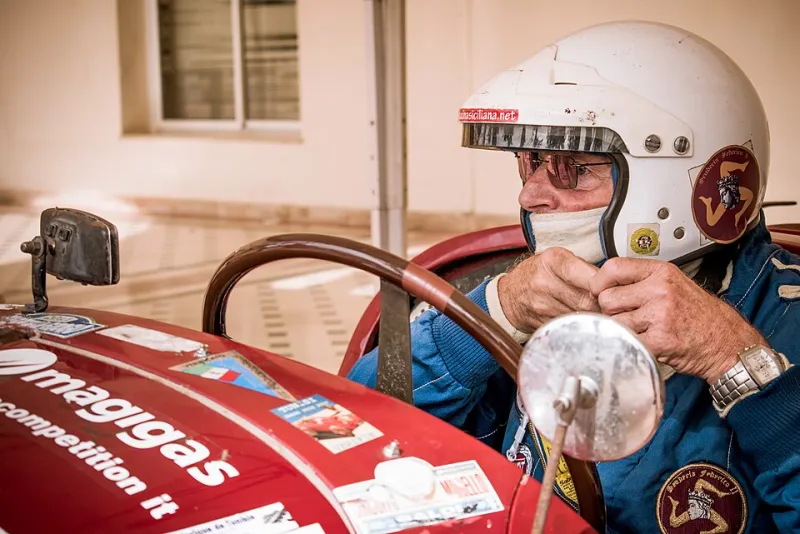
Photo: Monaam Ben Fredj, CC BY-SA 4.0, via Wikimedia Commons
The engine starts for no reason
It is 8:12 a.m. on a Tuesday in a subdivision outside Raleigh, North Carolina. A woman in a hoodie and yesterday's ponytail backs her CR-V out of the driveway, turns left at the stop sign, passes the same three mailboxes she passes every day, and gets in line at a drive-thru she does not need. Twenty-two minutes later she is home again. She has not gone anywhere. That was the point.
Welcome to the fake commute, one of 2026's quieter viral rituals. Search the phrase on TikTok and you will find thousands of clips — dashboards, coffee cups, a highway exit sign, a voiceover explaining that the drive is not about the destination. It is about the seam. The little seam between being a person and being an employee, the one that used to be provided free of charge by a Nissan Altima and 40 minutes of AM radio.
What remote work quietly took away
When offices emptied out, a lot of people celebrated the disappearance of the commute. No gas, no traffic, no listening to the same podcast ad read four times. What fewer people anticipated was the loss of a transition. You rolled out of bed, opened a laptop, and were instantly at work. At 5:30 you closed the laptop and were instantly home. The two states started bleeding into each other like watercolors left in the rain.
Dr. Renee Calloway, a workplace psychologist in Chicago who studies routine and boundaries, says the fake commute is not as silly as it looks. "Humans are terrible at context switching without physical cues," she says. "We used to have elevators, lobbies, parking garages, the walk past a receptionist. Take all that away and the brain never gets the memo that the shift happened." A short drive, a walk around the block, even a lap through a parking lot can function as a homemade lobby.
The loop has rules, sort of
Talk to enough fake commuters and patterns emerge. The drive is usually short — 10 to 25 minutes. It rarely involves an errand. Many people listen to the same playlist or the same morning show, the way they used to. Some drive to a coffee shop and sit in the car for five minutes without going in. A few have confessed to driving past their old office building, which is either sweet or haunting depending on your mood.
There is a version of this that costs nothing: walking to the end of the street and back, standing on the porch for a minute, or doing a lap around the yard. But the car has a specific appeal. It is enclosed, it is private, and it is unmistakably not your living room. For people whose apartments double as offices, that matters.
Your boss might actually like this
Here is the part that surprises people. Some managers are not just tolerant of the fake commute — they are quietly encouraging it. Not because they want you burning gas, but because they have watched remote teams blur into a fog of always-on availability. A person who takes a fake commute tends to log on with a cleaner head and log off with less resentment. Boundaries, it turns out, are a productivity tool.
"I would rather someone take 20 minutes to reset than spend three hours half-present," says Marcus DeLeon, who runs a small marketing firm in Austin. He does not call it a fake commute. He calls it a buffer. His team's handbook now includes a line suggesting employees build some kind of start-and-end ritual into the day. Nobody is required to drive anywhere. But nobody is mocked for it either.
The backlash is real, too
Not everyone is charmed. Critics point out that burning gas to feel like you have a job is a very 2026 solution to a problem created by work itself. There is also the environmental angle, the cost angle, and the simple fact that a lot of people cannot afford a car or a spare 20 minutes. The trend, as with most trends, skews toward salaried workers with flexible schedules and a full tank.
There is also the risk of the fake commute becoming one more thing to optimize. Already there are videos ranking the best fake-commute routes, the most scenic loops, the coffee shops with the best parking. Give it a year and someone will be selling a course on it. The people who actually do it, though, tend to keep it small and unglamorous. A drive, a coffee, a return.
The point is the pause
The fake commute is not really about driving. It is about giving the day a hinge. It is a way of saying, out loud and in gear, that the version of you who answers Slack is not the same as the version who makes dinner. That distinction used to be built into the architecture of American life. Now a lot of people are building it themselves, one pointless loop at a time.
If you try it, keep it simple. Pick a route you could drive half-asleep. Do not check your phone at stoplights. Come home, park, and take a breath before you open the door. The commute is fake. The boundary is not.