Stay Seated: The End-Credit Crawl Is 2026’s Most Obsessive Spectator Sport
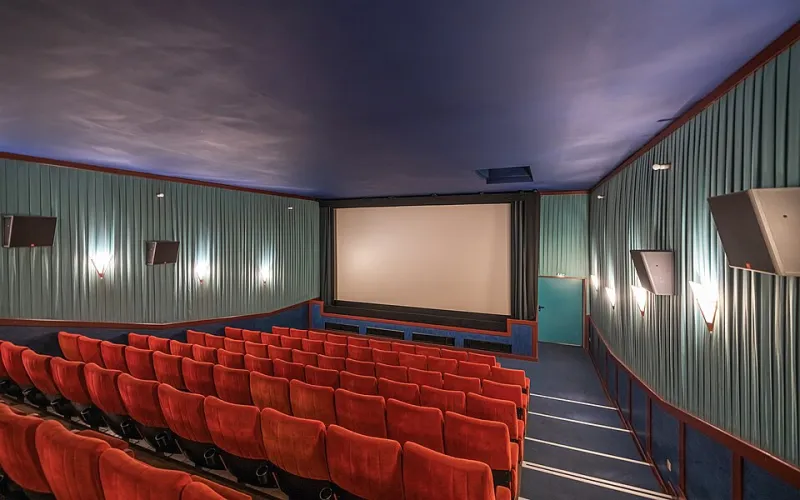
Photo: A.Savin, FAL, via Wikimedia Commons
The theater lights come up. The aisle seats empty. And then a small, stubborn cluster of people stays put, phones out, thumbs hovering over the pause button. They are not waiting for a post-credits scene. They are reading the crawl — all of it — like it is the last level of a video game.
Welcome to the end-credit fandom, a 2026 phenomenon where the scroll of names, jobs, and legal disclaimers has become its own spectator sport. These viewers are not just killing time before the parking lot clears. They are hunting for in-jokes, tracking repeat crew members, spotting fake names, and screenshotting the strangest job titles they can find. Then they post the evidence. The best "credit dumps" — annotated image carousels and slow-scroll videos — rack up millions of views, turning the least glamorous part of filmmaking into a niche celebrity circuit.
The Pause Button Is the New Popcorn
It started, as most niche internet things do, with a pause. Streaming gave people control over the frame, and the DVD-era habit of freezing on crew names found a new life on social platforms. But the real shift came when audiences began treating the crawl as a text to be decoded rather than a list to be ignored. On TikTok and Reddit, accounts dedicated to "credit archaeology" began posting side-by-side screenshots: the same gaffer on three indie releases, a sound mixer whose name appears in a dozen horror films, a stunt coordinator credited under a joke alias.
By 2026, the ritual has its own vocabulary. A "clean crawl" is one with no hidden gags. A "dirty dump" includes at least one Easter egg. "Name-spotting" is the practice of catching the same below-the-line worker across unrelated genres. And "the straggler shot" is the photo you take of the empty theater around you, proof that you outlasted everyone else.
The appeal is not nostalgia for DVD extras. It is closer to birdwatching. The credits are dense, repetitive, and full of patterns — and once you start noticing, the patterns become the show.
How a Crawl Became a Scoreboard
The competitive layer arrived quietly. Credit-dump creators began ranking films by "crawl density" (how many names appear per minute), "joke frequency" (self-aware credits from the crew), and "dedication drama" (the odd, tender, or cryptic thank-you notes at the end). Some viewers keep personal spreadsheets. Others maintain public leaderboards. A few have built bots that scan credit screenshots for repeated surnames, then flag them for the community.
This is not irony. The people doing it genuinely love the crawl. They love that a movie's final minutes are a phone book of human labor, and they love that the phone book occasionally contains a punchline. When a lighting technician is credited as "Chief Vibe Officer" or a catering team is listed as "Snack Division," the credit dump becomes a shared joke — a reminder that hundreds of people made the thing you just watched, and some of them have a sense of humor about it.
Studios Notice the Stragglers
It did not take long for studios to respond. In 2026, a handful of releases have included deliberate credit-crawl gags: fake names, hidden QR codes, animated doodles tucked between department headers, and dedication cards that change depending on the theater chain. None of this is new in spirit — Marvel turned post-credit stings into a habit back in the 2000s, and DVD menus once hid similar treats — but the current wave is different. It assumes someone is reading every line.
That assumption changes the craft. Credit designers now talk about "pacing the scroll" and "planting a reward" the way editors talk about cutting for laughs. Some productions have added a final, text-only joke after the legal disclaimers, knowing that the stragglers will be the only ones left to see it. It is a small gesture, almost invisible to the average viewer, but it lands with the people who stayed.
What the Credits Are Really Telling Us
The end-credit fandom is easy to dismiss as internet quirkiness — another way to turn passive entertainment into content. But there is something quieter happening. In an era when algorithms flatten everything into a feed, the crawl is stubbornly linear. It cannot be skimmed without missing something. It rewards attention with small, specific surprises. It makes the case that a movie is not just a story but a collaboration, and that the collaboration has a texture you can read if you are willing to sit still.
So the next time the lights come up, look around. The people still in their seats are not waiting for a bonus scene. They are reading the names. And in 2026, that counts as the main event.